Private Pilot · Unit 4 · 25 min
Operating Rules for Every Flight
By the end of this lesson you will know:
- the pilot in command's final authority and emergency deviation power under 14 CFR 91.3
- the right-of-way rules for converging, head-on, overtaking, and landing traffic
- the minimum safe altitudes over congested, open, and sparsely populated areas
- how to set the altimeter and pick a VFR cruising altitude by the hemispheric rule
- when position lights and anti-collision lights are required, and what another aircraft's lights reveal at night
- the preflight, seatbelt, and speed rules that apply to ordinary training flights
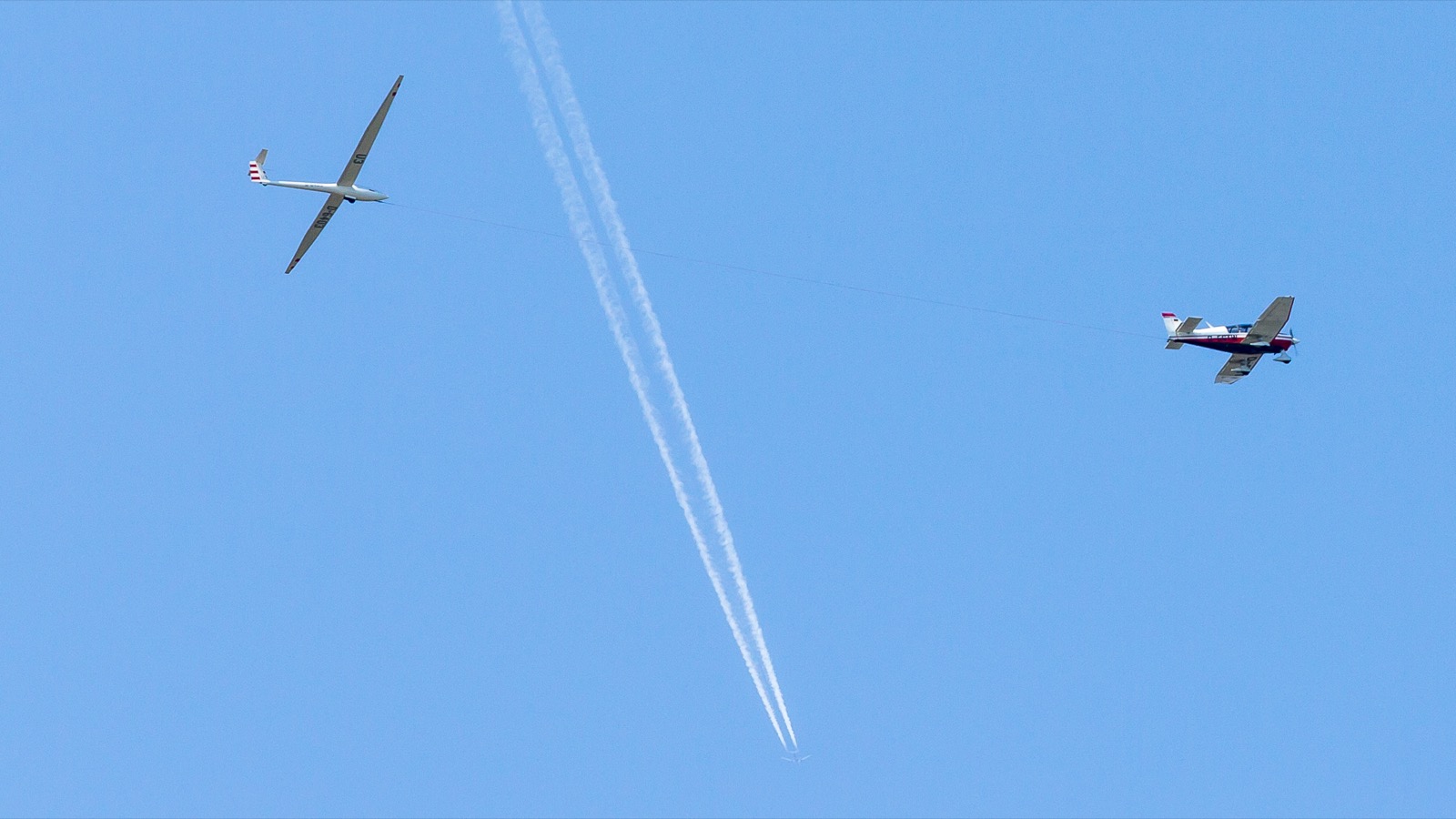
The lessons before this one covered who may fly, what keeps a certificate current, and what makes the airplane airworthy. This lesson covers the operating rules that govern the flight itself: who has authority, who gives way, how low and how fast you may fly, how you set your altitude, and what lights you show at night. These rules come from 14 CFR Part 91, the general operating and flight rules that an earlier lesson in this unit introduced alongside Part 61. They appear directly on the knowledge test, and several of them must be applied within seconds of sighting conflicting traffic.
The pilot in command answers for the flight
The pilot in command (PIC) is directly responsible for, and is the final authority as to, the operation of the aircraft (14 CFR 91.3(a)). In an in-flight emergency requiring immediate action, the PIC may deviate from any rule of Part 91 to the extent required to meet that emergency (14 CFR 91.3(b)). If you exercise that power, you must send the Administrator a written report of the deviation upon request (14 CFR 91.3(c)).
No person may operate an aircraft in a careless or reckless manner so as to endanger the life or property of another (14 CFR 91.13). A maneuver that breaks no specific numeric limit can still violate this rule if it endangers someone, so it is the standard against which any judgment call is measured.
14 CFR 91.3, 91.13; PHAK Ch 1, "The Regulatory System"
Before you fly: preflight action
Before beginning a flight, the pilot in command must become familiar with all available information concerning that flight (14 CFR 91.103). The rule splits the specifics into two tiers.
For a flight not in the vicinity of an airport, meaning any flight that leaves the local area, 14 CFR 91.103(a) requires you to review:
- weather reports and forecasts;
- fuel requirements;
- alternatives available if the planned flight cannot be completed;
- any known traffic delays of which you have been advised by air traffic control.
For any flight at all, including a short trip around the pattern, 14 CFR 91.103(b) requires you to know the runway lengths at airports of intended use and the takeoff and landing distance data for the aircraft. How you compute those distances from the performance charts in the airplane's Pilot's Operating Handbook (POH) belongs to the performance unit later in the course.
14 CFR 91.103; PHAK Ch 1
Seatbelts and the passenger briefing
Before takeoff, the pilot in command must ensure that each person on board is briefed on how to fasten and unfasten their safety belt and, if installed, their shoulder harness (14 CFR 91.107(a)(1)). Each person must then occupy a seat with the safety belt, and any installed shoulder harness, properly secured during movement on the surface, takeoff, and landing (14 CFR 91.107(a)(3)). A child under the age of two may be held by an adult, and an approved child restraint system may be used.
The flight crew carries a stricter version of the same rule. Each required flight crewmember must keep the safety belt fastened while at the assigned station, and must keep the shoulder harness fastened during takeoff and landing unless it prevents performing required duties (14 CFR 91.105). The harness covers the two phases where a sudden stop is most likely.
14 CFR 91.105, 91.107; PHAK Ch 1
See and avoid, and who gives way
When weather conditions permit, and regardless of whether the flight is conducted under instrument flight rules or visual flight rules (VFR), each person operating an aircraft must maintain vigilance so as to see and avoid other aircraft (14 CFR 91.113(b)). The right-of-way rules only decide what to do once you have seen the other aircraft.
Right-of-way is the priority the rules give one aircraft to hold its course while the other must give way. An aircraft in distress has the right-of-way over all other air traffic (14 CFR 91.113(c)). Below that, the geometry of the encounter decides.
The rules resolve each geometry in turn:
- Converging. When two aircraft of the same category are converging at about the same altitude, the aircraft to the other's right has the right-of-way (14 CFR 91.113(d)). If the aircraft are of different categories, a fixed order applies: a balloon has the right-of-way over any other category, a glider over an airship or an airplane or a rotorcraft, and an airship over an airplane or a rotorcraft. An aircraft towing or refueling another has the right-of-way over all other engine-driven aircraft. The less maneuverable aircraft, the one least able to give way, sits highest.
- Head-on. When two aircraft are approaching head-on, or nearly so, each pilot must alter course to the right (14 CFR 91.113(e)). They pass left side to left side.
- Overtaking. An aircraft being overtaken has the right-of-way, and the overtaking aircraft must alter course to the right to pass well clear (14 CFR 91.113(f)).
- Landing. An aircraft on final approach, or landing, has the right-of-way over aircraft in flight or operating on the surface (14 CFR 91.113(g)). When two aircraft are approaching to land, the one at the lower altitude has the right-of-way, but it may not use that priority to cut in front of, or overtake, another that is on final approach.
No person may operate an aircraft so close to another as to create a collision hazard (14 CFR 91.111(a)). Formation flight is permitted only by arrangement with the pilot in command of each aircraft in the formation, and never while carrying passengers for hire (14 CFR 91.111(b), (c)).
14 CFR 91.111, 91.113; PHAK Ch 14, "Collision Avoidance"
Speed limits
Two indicated-airspeed limits apply at the altitudes where a trainer actually flies. Below 10,000 feet mean sea level (MSL), no person may operate an aircraft at more than 250 knots indicated (14 CFR 91.117(a)). At or below 2,500 feet above the surface within 4 nautical miles of the primary airport of a Class C or Class D airspace area, the limit is 200 knots indicated (14 CFR 91.117(b)). Those airspace names get their full treatment in Unit 5.
A training airplane cruises well under both numbers. The rule has one exception: if the minimum safe airspeed for a particular operation is higher than the posted limit, you may fly at that minimum speed (14 CFR 91.117(d)).
14 CFR 91.117; PHAK Ch 1
Minimum safe altitudes
How low you may fly depends on what is beneath you. Except when necessary for takeoff or landing, no matter where you are, you must fly at an altitude that would allow an emergency landing without undue hazard to persons or property on the surface if the engine failed (14 CFR 91.119(a)). Two more minimums apply on top of that one.
- Over any congested area of a city, town, or settlement, or over an open-air assembly of people, you must fly at least 1,000 feet above the highest obstacle within a horizontal radius of 2,000 feet of the aircraft (14 CFR 91.119(b)).
- Over other than congested areas, the floor is 500 feet above the surface. Over open water or sparsely populated areas, you may fly lower, but not within 500 feet of any person, vessel, vehicle, or structure (14 CFR 91.119(c)).
14 CFR 91.119; PHAK Ch 1
Setting the altimeter
The pitot-static lesson explained that the altimeter reads height above mean sea level only when you dial in the correct reference pressure. The regulation that requires the correct setting is 14 CFR 91.121. Below 18,000 feet MSL, you must set the altimeter to the current reported altimeter setting of a station along the route and within 100 nautical miles of the aircraft (14 CFR 91.121(a)(1)). As you fly beyond 100 nautical miles of a station, you update the setting from the next one along the route, so the indicated altitude stays close to your true altitude.
At and above 18,000 feet MSL, every aircraft sets the altimeter to the standard pressure of 29.92 inches of mercury (14 CFR 91.121(a)(2)). With every altimeter set to the same reference, altitudes at that level are counted as flight levels (FL), labeled in hundreds of feet, so 18,000 feet becomes FL180. A trainer does not fly that high, and the airspace above 18,000 feet requires an instrument clearance.
14 CFR 91.121; AIM 7-2-1, "Altimeter Setting Procedures"
Cruising altitudes: the hemispheric rule
Above 3,000 feet above the surface, level cruising flight uses altitudes assigned by your direction of travel, so aircraft heading opposite ways are separated by 1,000 feet. The direction that matters is the magnetic course, the direction of the aircraft's path over the ground measured from magnetic north. How you compute it from a chart belongs to the navigation unit later in the course; the rule uses only which half of the compass it falls in.
The hemispheric rule assigns those altitudes (14 CFR 91.159). On a magnetic course of 0 through 179 degrees, fly an odd thousand-foot MSL altitude plus 500 feet, such as 3,500, 5,500, or 7,500. On a magnetic course of 180 through 359 degrees, fly an even thousand-foot MSL altitude plus 500 feet, such as 4,500, 6,500, or 8,500. The rule applies to VFR flight in level cruise more than 3,000 feet above the surface and below 18,000 feet MSL, so a climb, a descent, or low-level cruise does not invoke it (14 CFR 91.159(a)). A useful check: a course of 090 (due east) is odd-plus-500, and 270 (due west) is even-plus-500.
14 CFR 91.159; PHAK Ch 1
Lights at night
The lesson on currency and the lesson on airworthiness both pointed here for the operating rule on the aircraft's lights: 14 CFR 91.209. From sunset to sunrise, no person may operate an aircraft unless it has lighted position lights (14 CFR 91.209(a)). An aircraft equipped with an anti-collision light system must have its anti-collision lights lighted for all operations, day and night, except that the pilot in command may turn them off when operating conditions make it in the interest of safety to do so (14 CFR 91.209(b)).
The colors follow a fixed layout: a steady red light on the left wingtip, a steady green light on the right wingtip, and a white light on the tail. Because you see the red light only from an aircraft's left side and the green only from its right, a single color tells you which way the traffic is crossing. Seeing its green light means it is crossing from your left to your right; seeing its red means it is crossing from your right to your left; seeing both red and green means it is pointed toward you. Traffic crossing from your right is on your right, and under the converging rule it has the right-of-way.
14 CFR 91.209; AIM 4-3-23, "Use of Aircraft Lights"
Two rules for unusual maneuvers
Two limits apply the day you fly steep maneuvers. Aerobatic flight is an intentional maneuver involving an abrupt change in attitude, an abnormal attitude, or abnormal acceleration not necessary for normal flight (14 CFR 91.303). No person may operate an aircraft in aerobatic flight (14 CFR 91.303):
- over a congested area of a city, town, or settlement;
- over an open-air assembly of people;
- within the lateral boundaries of the surface areas of Class B, C, D, or E airspace designated for an airport;
- within 4 nautical miles of the centerline of a Federal airway;
- below 1,500 feet above the surface;
- when flight visibility is less than 3 statute miles.
Those airspace names and Federal airways come with airspace in Unit 5.
The parachute rule sets a lower threshold that a training flight can reach. Unless each occupant is wearing an approved parachute, no pilot carrying anyone other than a crewmember may execute an intentional maneuver that exceeds 60 degrees of bank or 30 degrees of nose-up or nose-down pitch relative to the horizon (14 CFR 91.307(c)). That rule does not apply to flight tests for a certificate or rating. It also does not apply to spins and other maneuvers the regulations require for a certificate or rating, when a certificated flight instructor gives them (14 CFR 91.307(d)). Your steep turns and stall practice stay inside the 60-degree and 30-degree limits, so the parachute requirement does not reach them.
14 CFR 91.303, 91.307; PHAK Ch 1
Rules held for later units
Several Part 91 operating rules belong with material you have not met yet:
- the VFR weather minimums and the transponder and ADS-B equipment rules, with airspace in Unit 5;
- the airport-vicinity rules and compliance with ATC instructions, with airport operations in Unit 6;
- the fuel-reserve requirements, with cross-country planning in Unit 10;
- the alcohol and supplemental-oxygen rules, with aeromedical factors in Unit 11.
Check your understanding
Answer from memory, without scrolling back up. Recalling it yourself is what makes it stick.
A glider and an airplane are converging at the same altitude. Which has the right-of-way?
Among different categories, a glider has the right-of-way over an airplane (14 CFR 91.113(d)). The less maneuverable aircraft sits higher on the ladder. (PHAK Ch 14)
The category ladder gives a glider priority over an airplane. Speed does not decide it; the fixed order in 14 CFR 91.113(d) does.
When two aircraft approach each other head-on, each pilot should?
Each pilot alters course to the right in a head-on encounter, so the two aircraft pass left side to left side (14 CFR 91.113(e)). (PHAK Ch 14)
Both turn right, not left, and not vertically. Turning right by each aircraft keeps them clear of one another.
You are overtaking a slower airplane ahead of you. You must?
The overtaken aircraft has the right-of-way; the overtaking aircraft alters course to the right and passes well clear (14 CFR 91.113(f)). (PHAK Ch 14)
You give way, not the aircraft ahead. Alter to the right and pass well clear, since the overtaken aircraft has the right-of-way.
Two aircraft are approaching an airport to land. Right-of-way belongs to?
The lower aircraft has the right-of-way, but it may not use that to cut in front of or overtake one already on final (14 CFR 91.113(g)). (PHAK Ch 14)
The lower aircraft has priority, not the higher or faster one, and it still may not cut in front of an aircraft on final approach.
Over a congested area, the minimum safe altitude is?
Over a congested area, fly at least 1,000 feet above the highest obstacle within a 2,000-foot horizontal radius (14 CFR 91.119(b)). (PHAK Ch 1)
The floor is measured from the highest obstacle, not the surface, and the figures are 1,000 feet and a 2,000-foot radius, not the reverse.
Over open water or a sparsely populated area, you may not fly within?
Over open water or sparse areas there is no fixed floor above the surface, but you must stay 500 feet from any person, vessel, vehicle, or structure (14 CFR 91.119(c)). (PHAK Ch 1)
The distance is 500 feet, not 1,000, and it is measured from people and objects, not from the surface, over open water and sparse ground.
Below 18,000 feet MSL, you set the altimeter to the reported setting of?
Below 18,000 feet MSL, set the current reported altimeter setting of a station along the route within 100 nautical miles (14 CFR 91.121). (AIM 7-2-1)
You update from stations along the route, not hold the departure value, and 29.92 is used only at and above 18,000 feet MSL.
In level cruise at 4,500 feet MSL, 4,000 feet above the surface, on a magnetic course of 090, you are?
A course of 090 falls in the 0-to-179 band, which takes odd thousands plus 500, such as 3,500 or 5,500, not 4,500 (14 CFR 91.159). (PHAK Ch 1)
Easterly courses take odd plus 500, so 4,500 is wrong for 090. The rule applies to level cruise more than 3,000 feet above the surface.
An aircraft's position lights are required to be on during?
Position lights are required from sunset to sunrise (14 CFR 91.209(a)). The anti-collision lights, not the position lights, are the ones required for all operations. (AIM 4-3-23)
The span is sunset to sunrise, defined by those two events. The all-operations requirement belongs to the anti-collision lights.
For a flight away from the vicinity of an airport, preflight action must include?
For a flight not in the vicinity of an airport, review weather reports and forecasts, fuel requirements, alternatives, and known traffic delays (14 CFR 91.103). (PHAK Ch 1)
The named items are weather, fuel, alternatives, and known ATC delays. A compass swing and a mechanic's sign-off are not part of 14 CFR 91.103.
Go deeper (primary source): read 14 CFR 91.113 and 14 CFR 91.119 in full, then skim Subparts A through D of 14 CFR Part 91 to see how many of these rules read in one page. The next lesson in this unit takes up accident and incident reporting under NTSB 830.