Private Pilot · Unit 1 · 25 min
In the Cockpit: Controls and What They Connect To
By the end of this lesson you will know:
- which control surface the yoke, rudder pedals, and toe brakes each move
- what the black throttle knob and the red mixture knob each set
- what the master switch, ignition switch, fuel selector, and carburetor heat do
- how trim holds elevator pressure so you fly without constant yoke force
- why the rudder pedals do not steer the airplane in flight
Your hands and feet
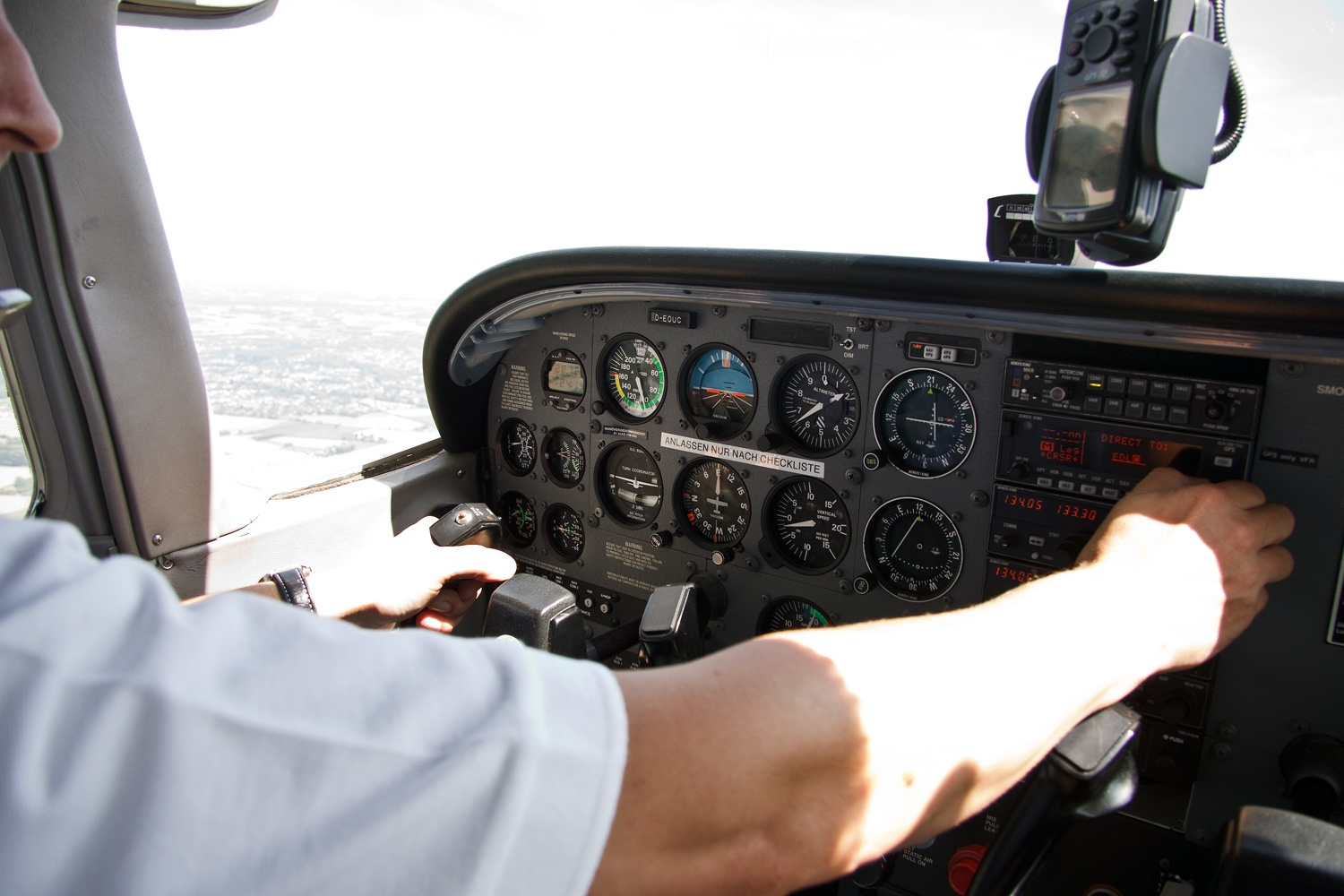
In a Cessna 172 you sit in the left seat. Your left hand holds the yoke, your right hand works the engine controls, and your feet rest on the rudder pedals. Every flight control connects to a surface you met in Parts of an Airplane:
- Turn the yoke left or right and the ailerons deflect, rolling the airplane into a bank.
- Push or pull the yoke and the elevator deflects. Push forward and the nose goes down; pull back and the nose comes up.
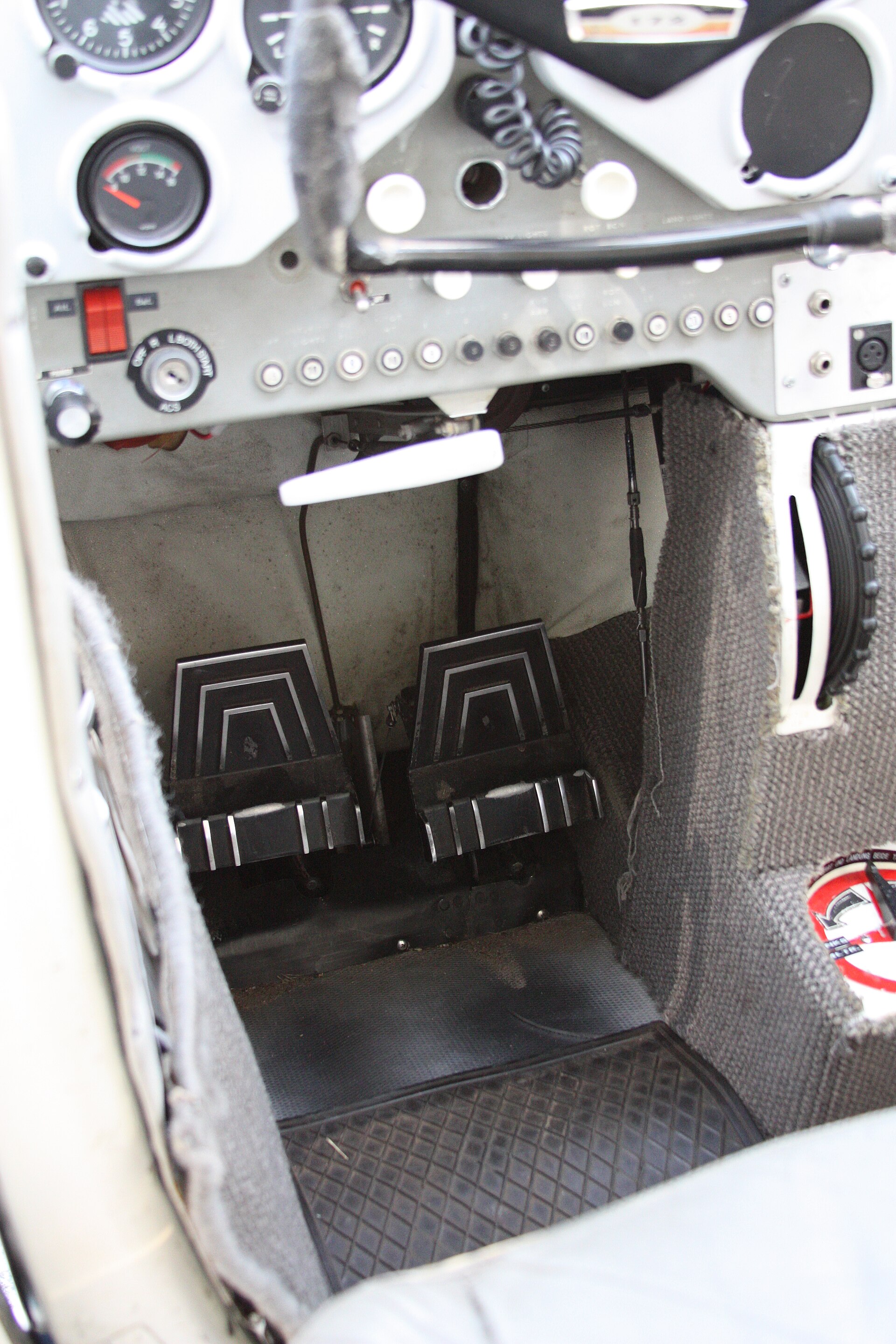
- Press a rudder pedal and the rudder deflects, yawing the nose toward the foot you pressed. On the ground, the pedals also steer the nose wheel.
- Press the tops of the pedals to apply the toe brakes on the main wheels. Brakes are for the ground; there is nothing to brake against in the air.
PHAK Ch 6, "Flight Control Systems"
The engine controls
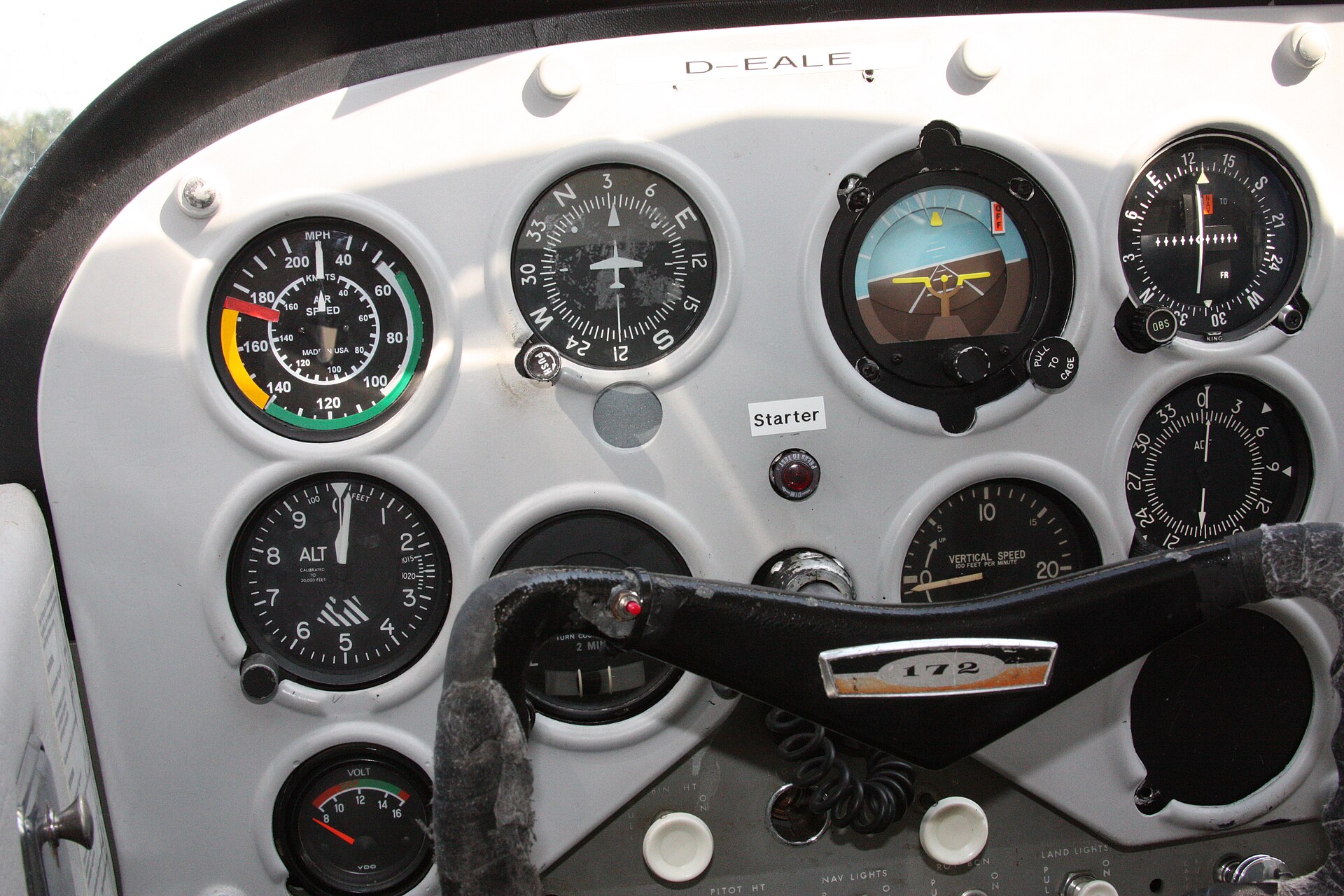
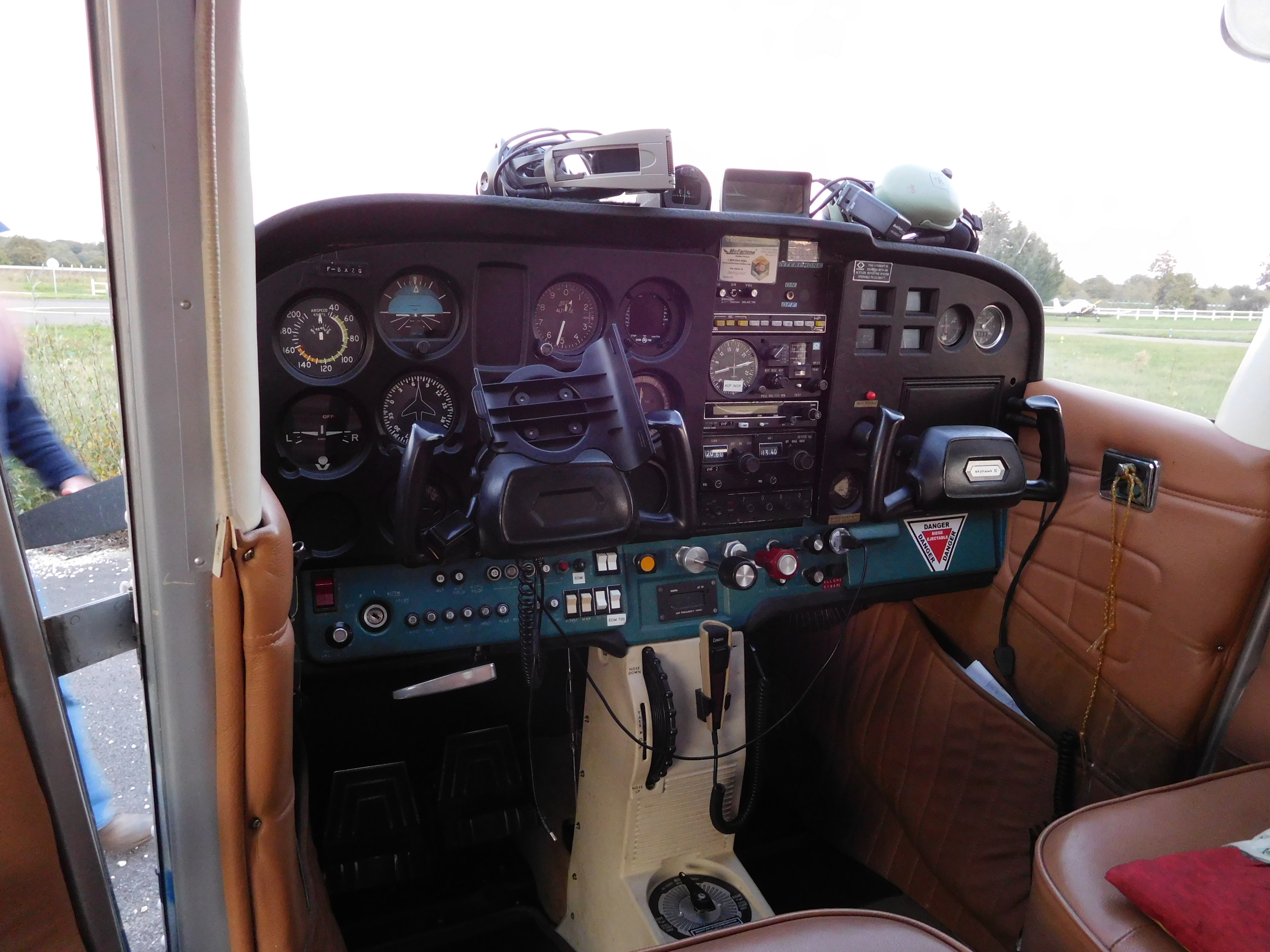
Two knobs on the panel manage the engine, and their colors are standardized so you never confuse them:
- The throttle is the black knob. Push it in for more power, pull it out for less. It is your thrust lever.
- The mixture control is the red knob. It sets the ratio of fuel to air going into the engine: full in is rich, pulled out is lean, and pulled all the way out shuts the engine down.
How the engine actually uses fuel and air is Unit 3's territory. For now, know which knob is which and what each one changes.
PHAK Ch 6; PHAK Ch 7, "Powerplant Controls"
Other controls you will meet on day one
Your first engine start touches four more controls, so meet them here first:
- The master switch is the red, split rocker on the left side of the panel. It turns on the electrical system: lights, radios, fuel gauges, and, on a 172, the flap motor. Its two halves (BAT and ALT) control the battery and the alternator separately; you will normally flip them together.
- The ignition switch takes the key, with positions OFF, R, L, BOTH, and START. The spark that fires the engine comes from two magnetos, small self-contained generators that spin with the engine and keep making spark even if the battery dies. You fly on BOTH; the runup check of R and L confirms each magneto works alone.
- The fuel selector sits on the floor between the seats. On a 172 the positions are LEFT, RIGHT, and BOTH, and BOTH is the normal setting. The airplane feeds by gravity from the high wings, which is one of the quiet advantages of a high-wing trainer.
- Carburetor heat, a separate black knob, appears on carbureted models like the older 172s. It routes warm air to the carburetor to prevent and clear carburetor ice. Fuel-injected airplanes don't have one. Why carburetors ice up at all is a Unit 3 story.
PHAK Ch 7, "Ignition System" and "Fuel Systems"
Trim: the control that holds for you
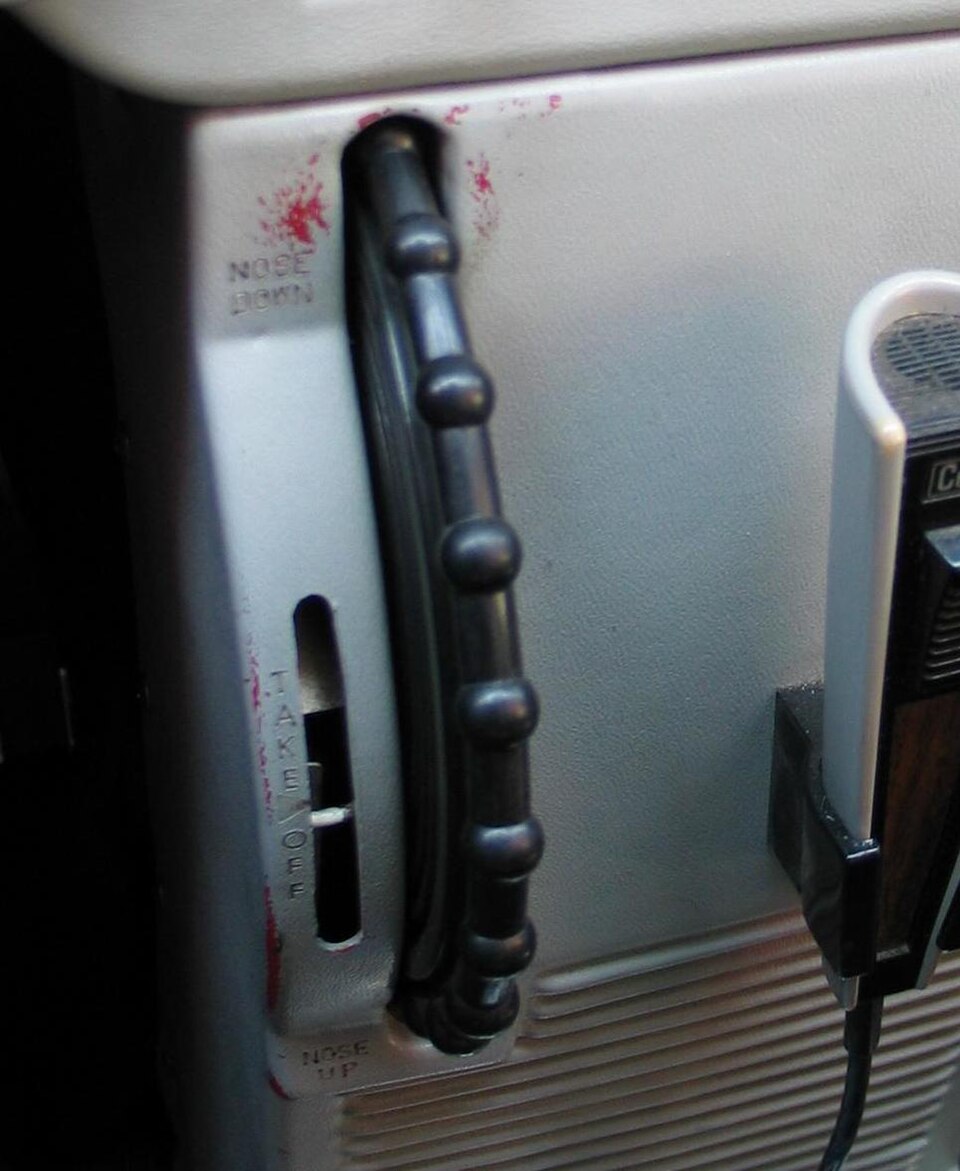
Holding back-pressure on the yoke for a whole flight would wear your arm out. The trim wheel fixes that. It positions a small trim tab on the elevator's trailing edge, and the tab deflects the airflow so it holds the elevator in position for you. The habit you will learn: set the attitude with the yoke, then roll in trim until the pressure disappears.
A properly trimmed 172 will hold its pitch attitude and airspeed with your hand off the yoke for surprisingly long stretches. That is not luck; light airplanes are designed to be stable, and trim is how you let that stability do the work. Later in the course, the lesson on stability and center of gravity explains where that behavior comes from.
PHAK Ch 6, "Trim Systems"
Check your understanding
Answer from memory, without scrolling back up. Recalling it yourself is what makes it stick.
Pulling the yoke toward you does what?
Pulling back deflects the elevator up, which pushes the tail down and the nose up. (PHAK Ch 6)
Pull back and the nose comes up: the elevator deflects upward, pushing the tail down. Rolling belongs to turning the yoke, not pulling it.
In flight, what do the rudder pedals do?
The pedals deflect the rudder, which yaws the nose left or right. In-flight turns come from banking, with the rudder keeping the nose in step.
In the air the pedals only yaw the nose. Turning the airplane comes from banking with the ailerons, and banking is the yoke's job.
Which control sets the fuel-to-air ratio?
Mixture is the red knob: full in is rich, out is lean, all the way out shuts the engine down. (PHAK Ch 7)
The mixture knob is the red one, and it sets the fuel-to-air ratio. The throttle sets power; the trim wheel holds elevator pressure.
What does trim actually do?
The trim tab holds the elevator where you need it so you can fly without constant yoke pressure. Set the attitude, then trim the pressure away.
That describes flaps and nose wheel steering. Trim positions a small tab on the elevator so the airplane holds its pitch attitude without you muscling the yoke.
How do you apply the wheel brakes?
The toe brakes live on top of the rudder pedals and act on the main wheels. They are ground-only equipment.
That control does something very different. The brakes are toe brakes: press the tops of the rudder pedals to slow the main wheels on the ground.
Where does the engine's ignition spark come from?
Magnetos are self-contained generators that spin with the engine, so the spark keeps coming even with the battery dead. That independence is the point. (PHAK Ch 7)
The electrical system runs the radios and lights, but ignition is deliberately independent: two engine-driven magnetos keep the spark alive even if the battery dies.
What does the master switch actually turn on?
Master on powers lights, radios, gauges, and the flap motor. The engine's spark and the fuel supply are deliberately separate systems.
Those work without the master switch, by design. The master powers the electrical equipment: lights, radios, gauges, and the flap motor.
What is the normal fuel selector position for a 172?
BOTH lets gravity feed the engine from both wing tanks evenly. The single-tank positions exist for specific procedures, not everyday flying.
Single-tank positions have their uses, but normal operation is BOTH, feeding evenly from the two wing tanks by gravity.
Go deeper (primary source): read PHAK Chapter 6, "Flight Controls", focusing on the primary controls and trim sections. About ten minutes, and it adds the mechanical detail this lesson leaves out.